JUAN CAMILO HERNANDEZ CANTOR ©️
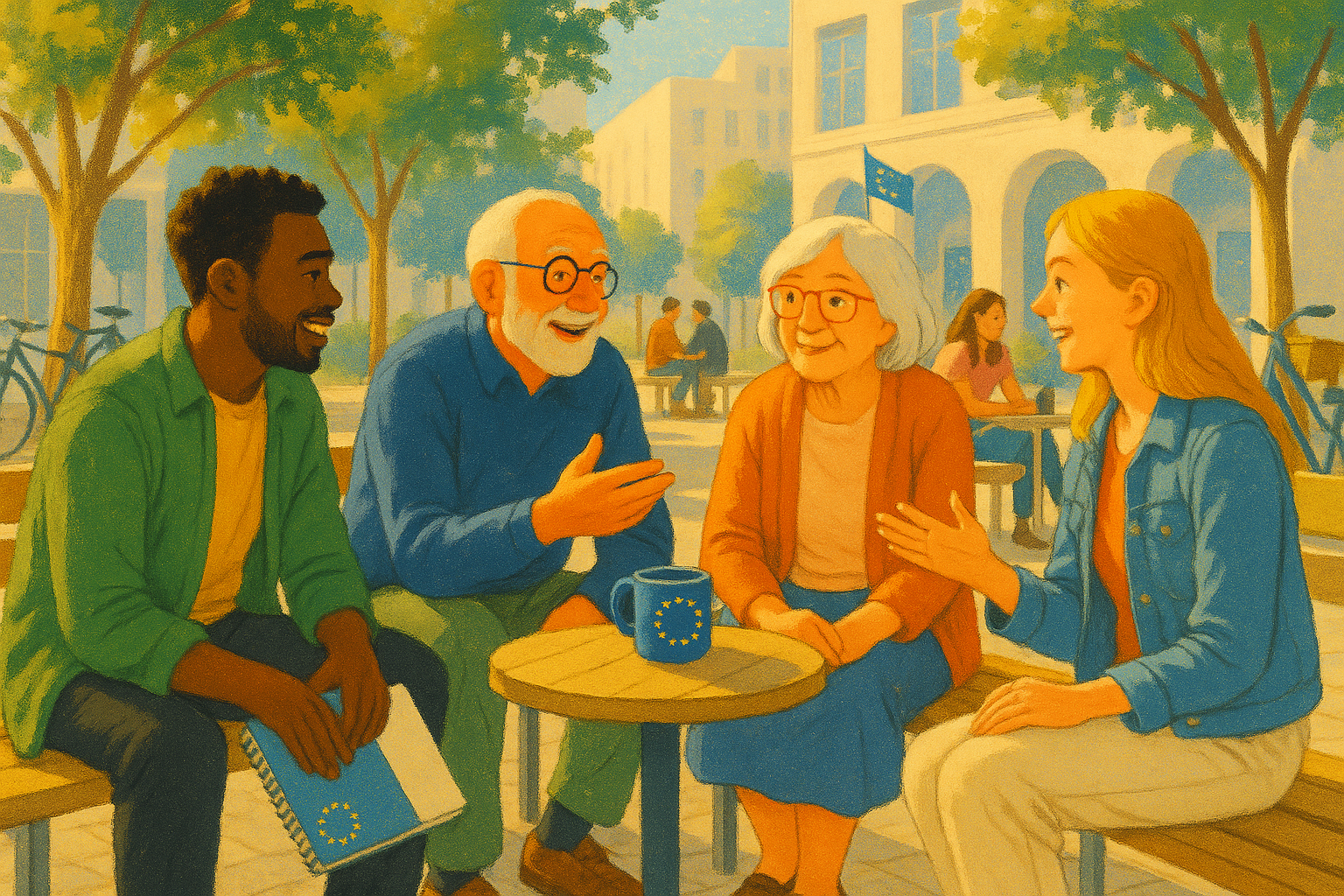
DEMOCRACY REIMAGINED
MAKING EU VALUES ACCESIBLE THROUGH INCLUSIVE MULTICULTURAL& INTERGENERATIONAL APPROACH
DEMOCRACY REIMAGINED
M.A PROJECT
Area
Public Policies Innovation
Team
x5 job creative backgrouns master studnets ( Malaika 🇺🇸 - lipika 🇮🇳 - hannah 🇩🇪 - huymra 🇧🇩)
Mentorship
Prof. Katrin Androshin - Prof. Julia Leihener (Program directors)
Drik Von Holleben ( information & communication officer European union)
Year
2024-2025
Location
between Brussels 🇧🇪 & Berlin 🇩🇪
Tags
Public Policies
Democratic Participation
Social Innovation
Co-participatory design
Specualtive Design Strategy
How can we break down the values of Europe and thus of
the European Union to an understandable level, with the
aim of making them accessible to different target groups,
so that these values are lived more in everyday life again
and democracy is strengthened in the long term?
GOALS
AGILE SPRINT
We got onboard late on this project as it came at the last minute. No harm done; however, we had a clear and obvious constraint: deliver on time without sacrificing quality.
MVP
- Have a strong and digital-based research focusing on young generations in Europe.
- Decentralising the power of information, focusing on border-oriented results (why?:
Political and social transformations often manifest first at the margins or borders of states - physical, cultural, or institutional - because these are zones of negotiation, contact, and friction. The centre typically reacts later, institutionalising what the periphery has already lived or contested.
“Change begins in the borderlands because they are closer to lived contradictions”
Peripheral Modernities / Latin American Decolonial Thought (Walter Mignolo, Aníbal Quijano)
- Use speculative design and forecasting to develop a very realistic, adaptable, and versatile solution for as much as possible with the diversity of cultures present in the EU currently.
PROBABLE IMPACT
- Built a digital research foundation connecting insights from young generations across Europe.
- Shifted information power from central institutions towards more border-oriented, inclusive perspectives.
- Developed speculative yet realistic design scenarios reflecting Europe’s cultural diversity.
- Delivered an adaptable framework that can evolve with future social and political contexts.
RESEARCH FROM THE BIASES TO THEORIES
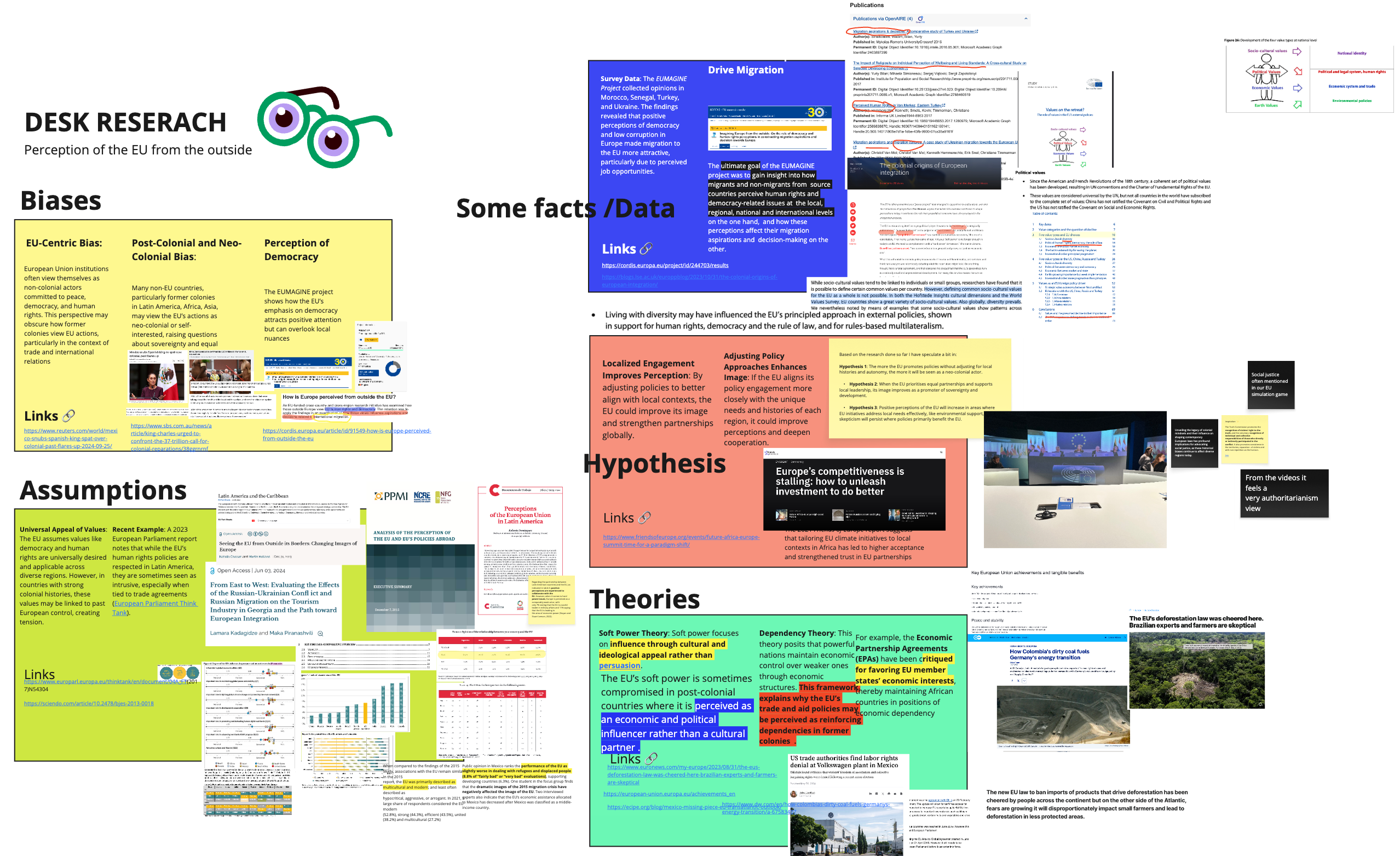
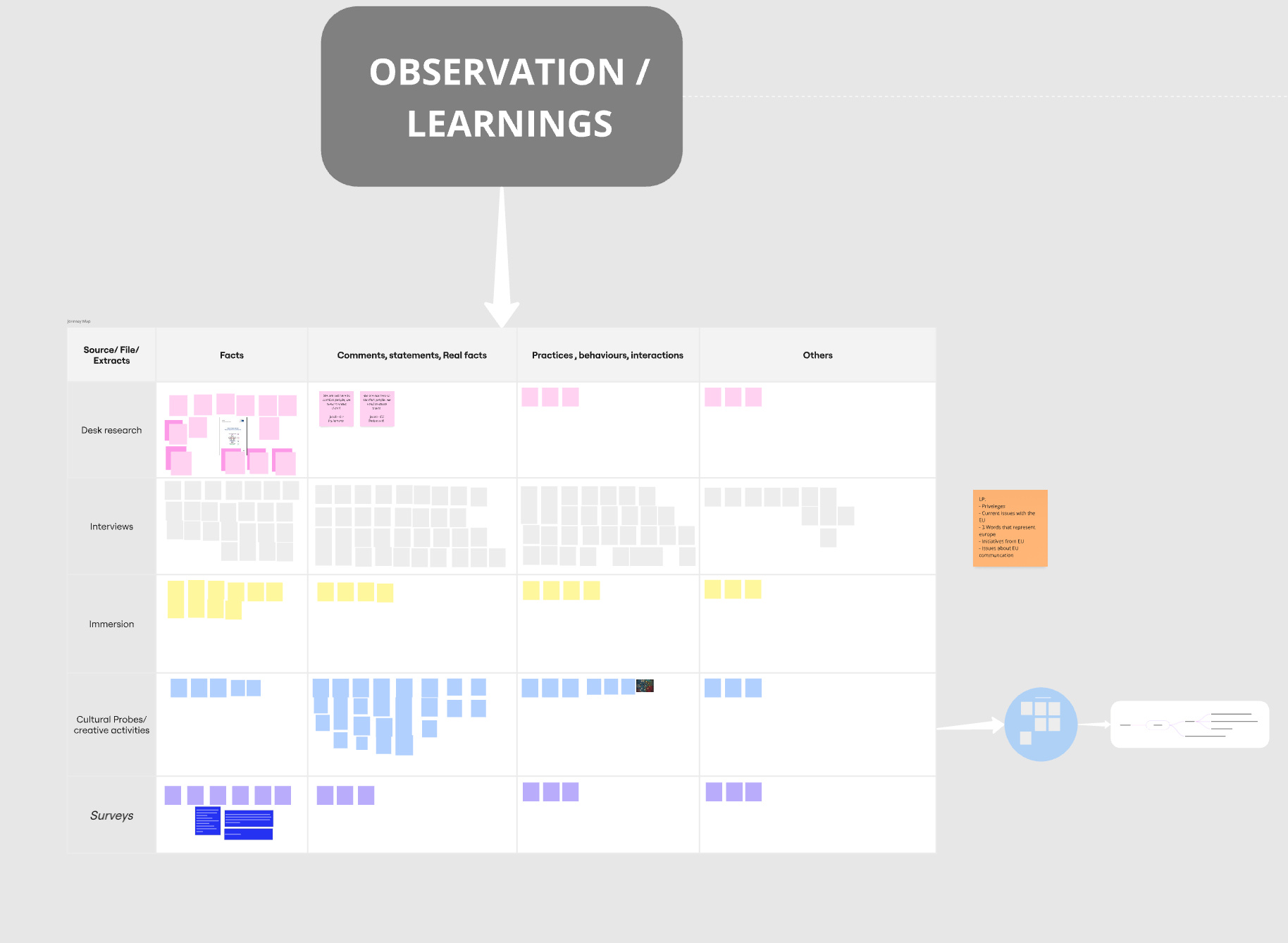
The first phase was all about understanding perception - how the EU is seen from the outside. We started by mapping everything: biases, assumptions, data, and theories. It looked messy at first, but that was the point - to reveal contradictions and blind spots in how Europe tells its story. Using the triple diamond as a loose guide, this stage became a space for experimentation where research met emotion.
We built a visual system that connected facts and feelings, turning abstract information into something tangible and human — a foundation for the next phase of synthesis and concept creation.
COMPLEMENTARY RESEARCH
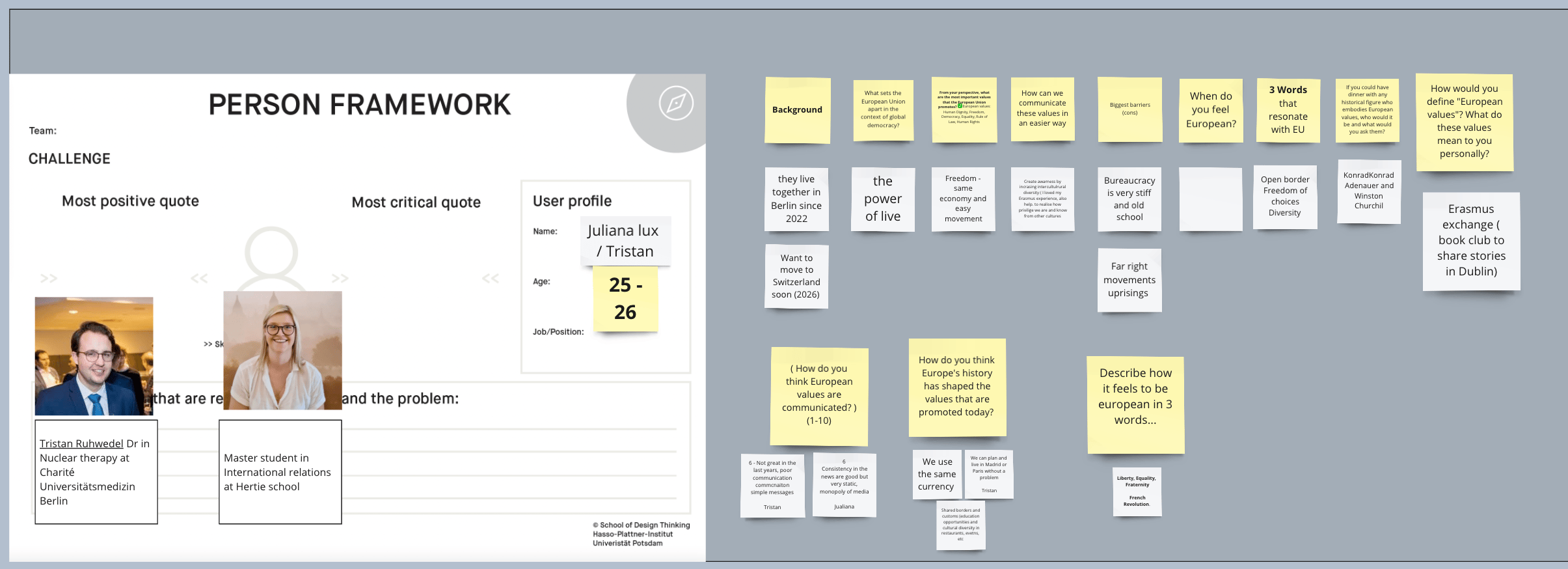
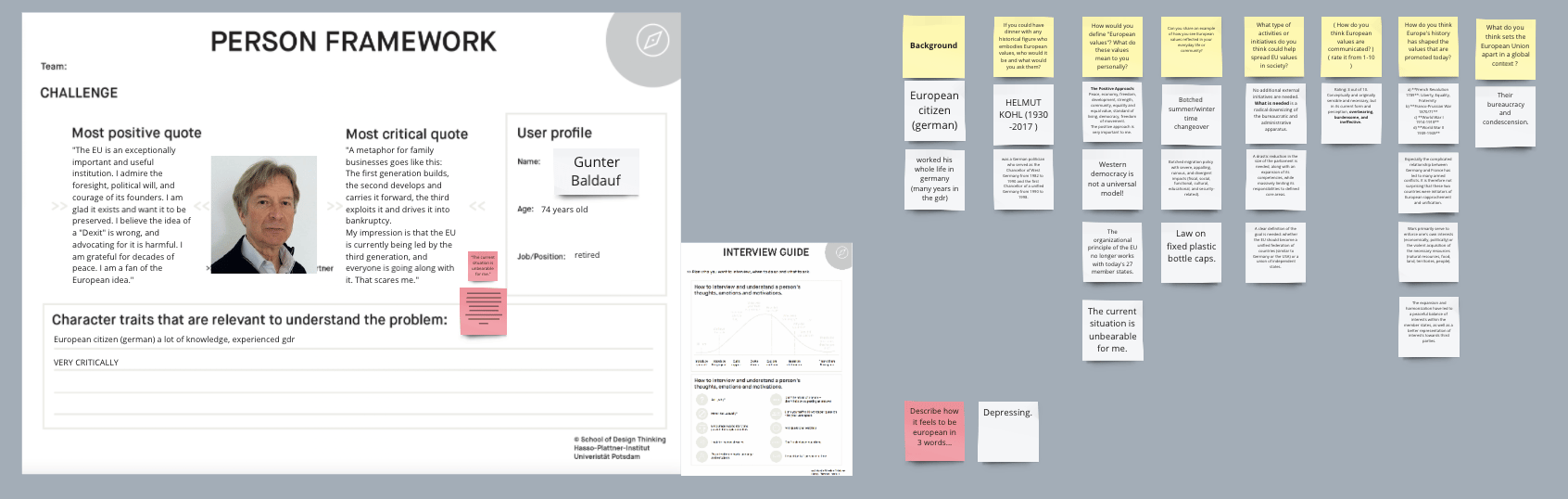
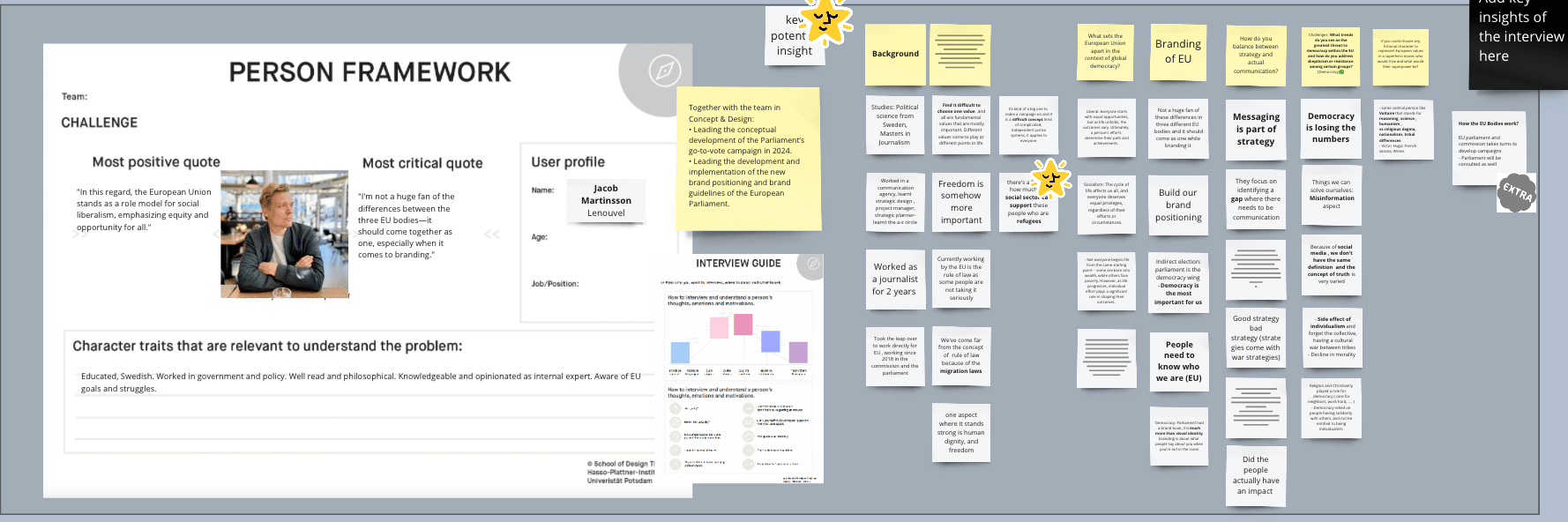
As our research was primarily qualitative, focusing on understanding narratives, perspectives, and experiences rather than numerical data. we aimed to obtain on insights gathered through interviews, observations, and desk research, all organised and analysed using
Miro boards. These boards serve as a visual space where you can explore our findings, methods, and key takeaways in more detail.
please find more about here
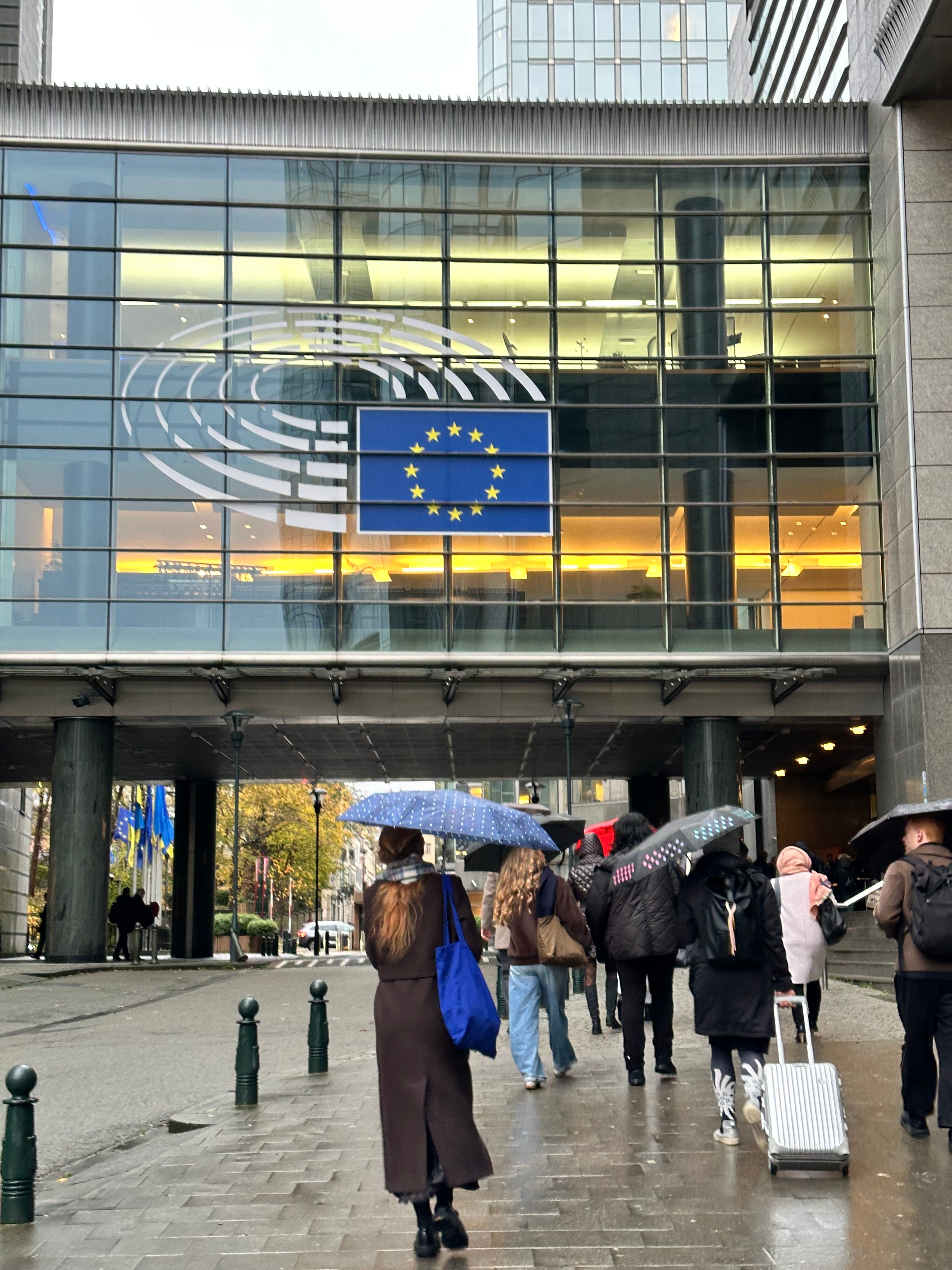
According to the Standard Eurobarometer 102 (Autumn 2024), 81% of respondents in the euro area support the common currency (the euro) — the highest level ever recorded.
Speaking a language doesn’t simply mean translating a message into that language. English often serves as a neutral ground for discussing certain topics.
One assumption is that people who took the survey might feel more comfortable discussing their collective role within the EU rather than focusing on individual aspects of their identity.
Another assumption is that people don’t want the EU to interfere with their personal identity, as they don’t see it as the EU’s responsibility.
Mobility facility is a greater common good value that most of the “citizens” are pride of.
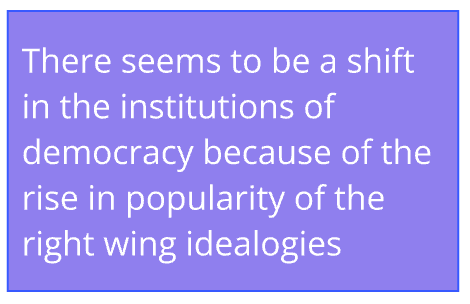
Migration remains a central theme and a recurring point of distortion within right-wing and extremist political ideologies across several regions.
Despite its efforts to promote democracy, the EU struggles with a "democratic deficit," where decisions are often made by unelected bodies with limited direct citizen involvement.
SYNTHESIS
SUMMARY
In the synthesis phase, we aimed to make sense of the diverse insights gathered during research, connecting different perspectives to form a clear and structured understanding. Our approach combined systematic analysis with collaborative interpretation, ensuring that the complexity of European values was broken down into actionable insights.
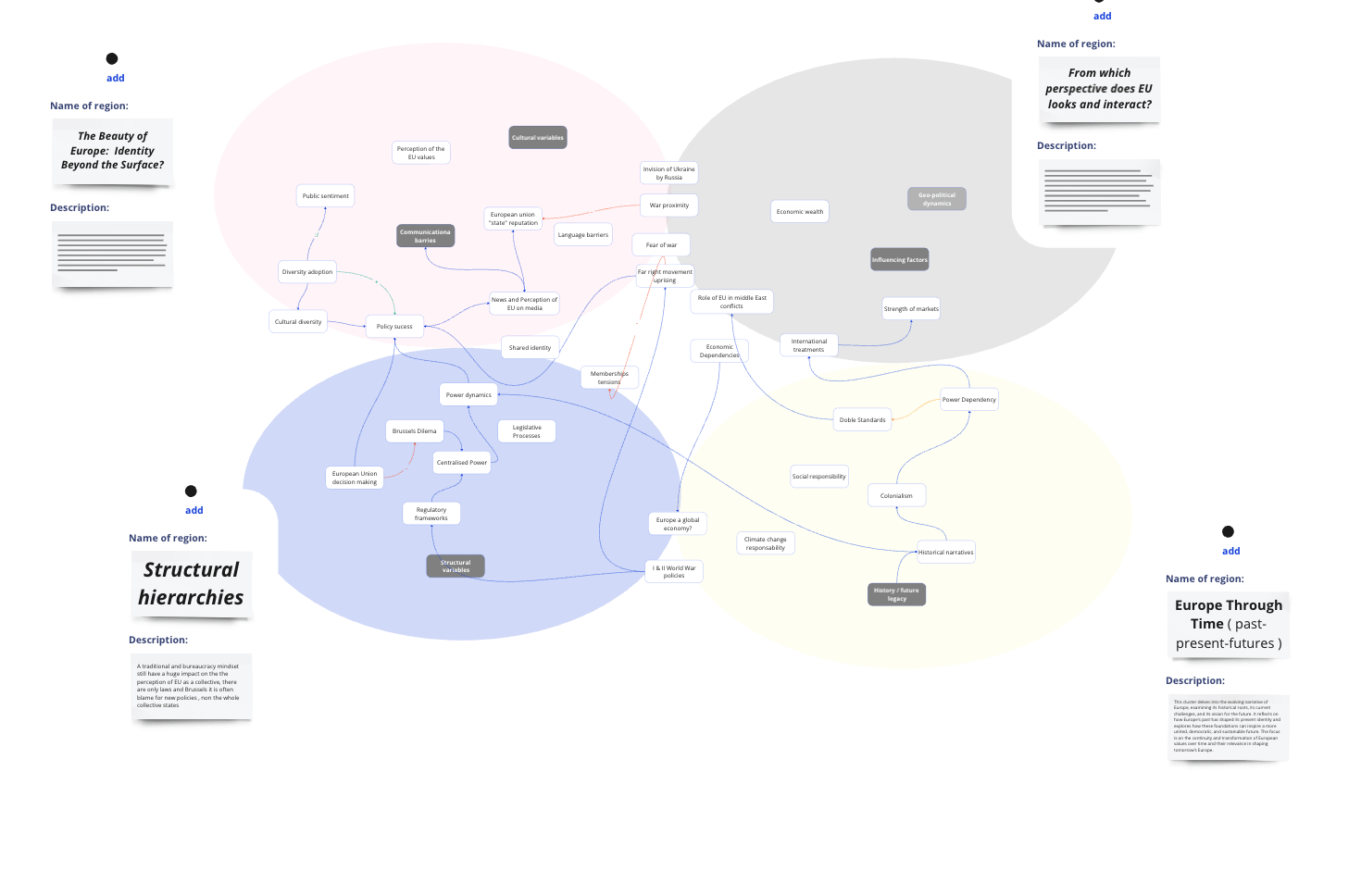
System Map
HOW WE IMAGINE IT
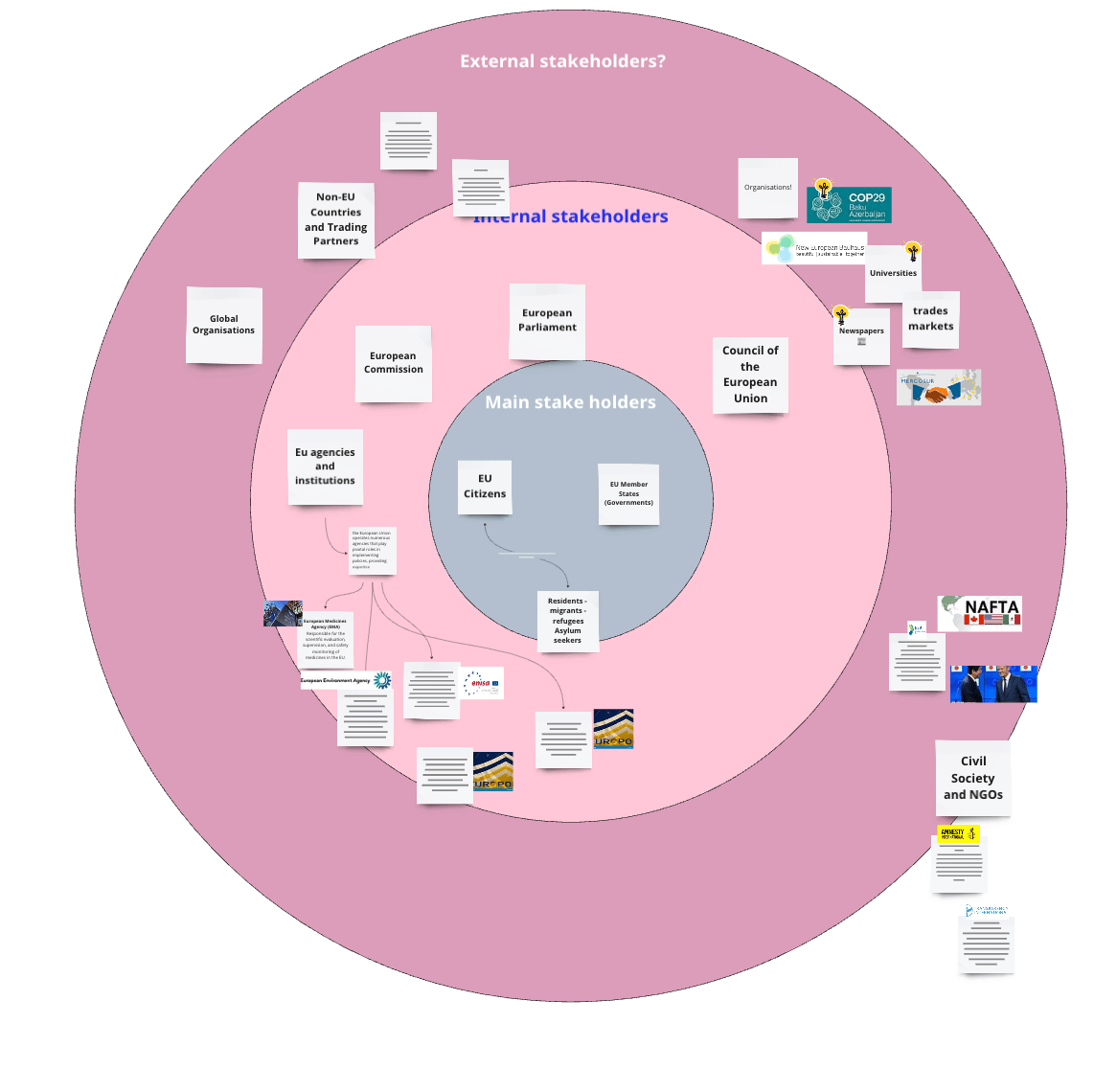
System Map
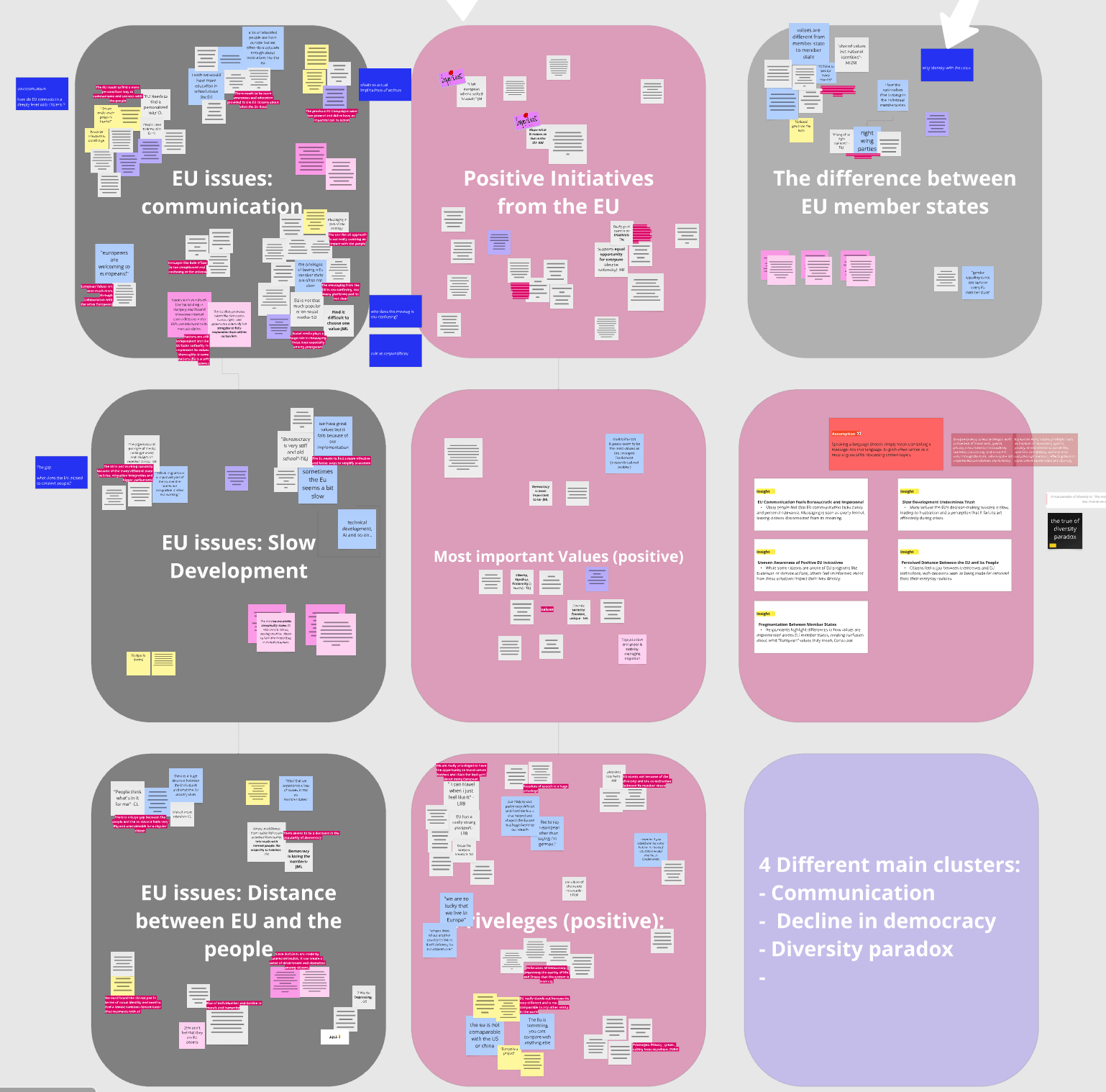
AFFINITY DIAGRAM
OPPORTUNITY FIELDS
We explored opportunity fields in combination with iceberg models to identify not only surface-level connections but also deeper causal relationships.
This allowed us to uncover strong links and pinpoint key areas with the potential for development, aligning with the initial brief’s focus on addressing specific pain points.
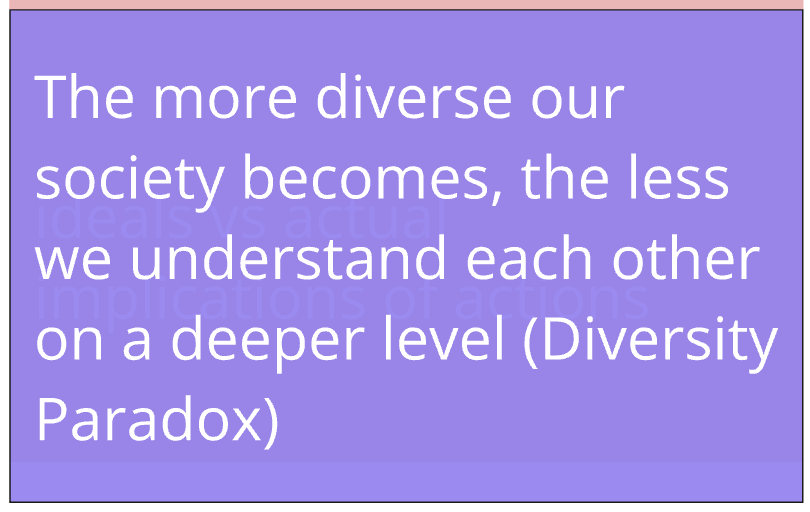
HOW MIGHT WE #1
How might we
remind people of why the EU exists by becoming a memorable part of
everyday communication and interaction so they can feel represented and supportive?
HOW MIGHT WE #1
How might we
remind people of why the EU exists
by becoming a memorable part of
everyday communication and interaction?
HOW MIGHT WE #1
How might we
become a memorable part of everyday communication and interaction
so people of the EU can feel represented and supportive?
SPECULATIVE IDEATION
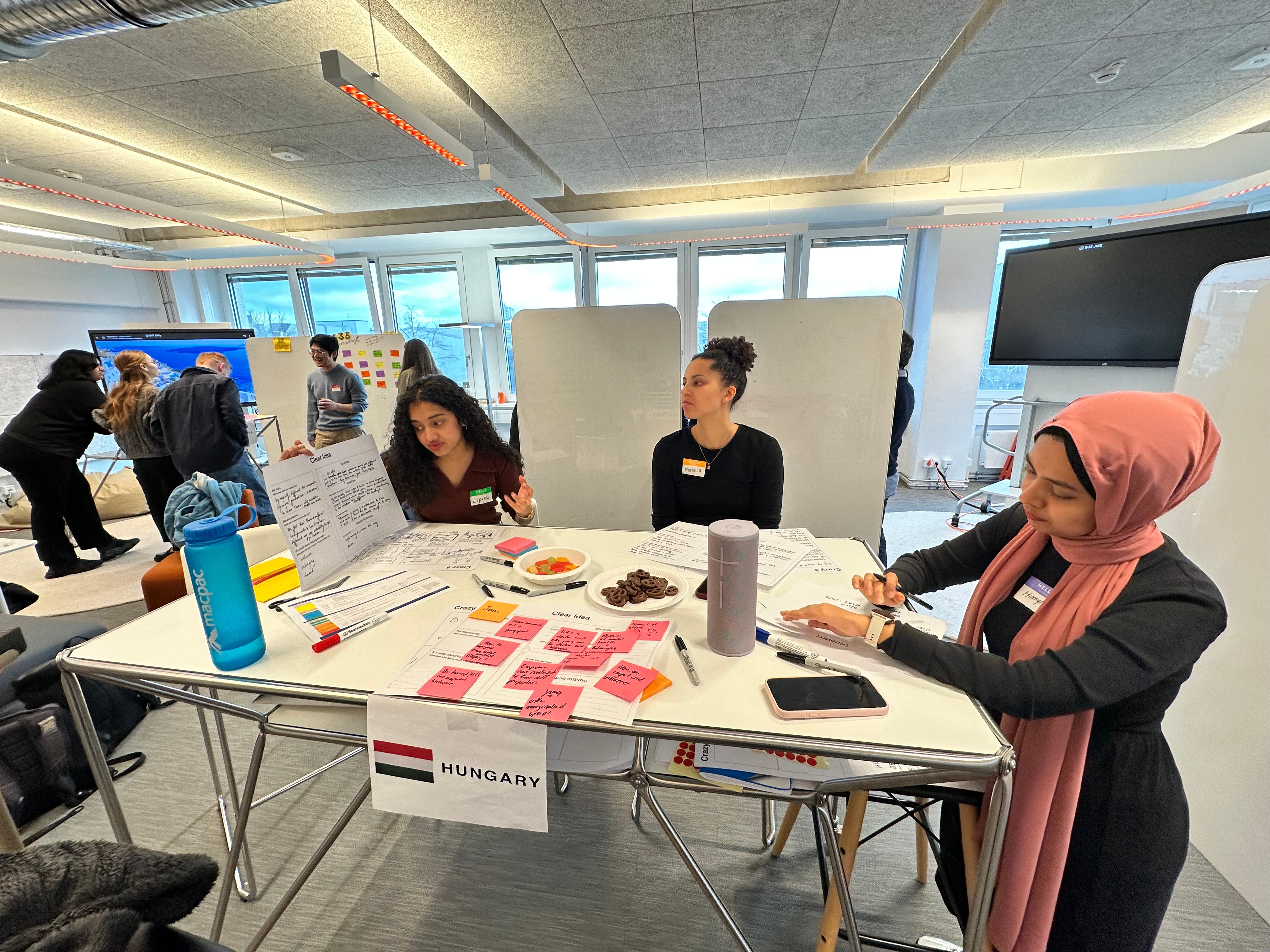
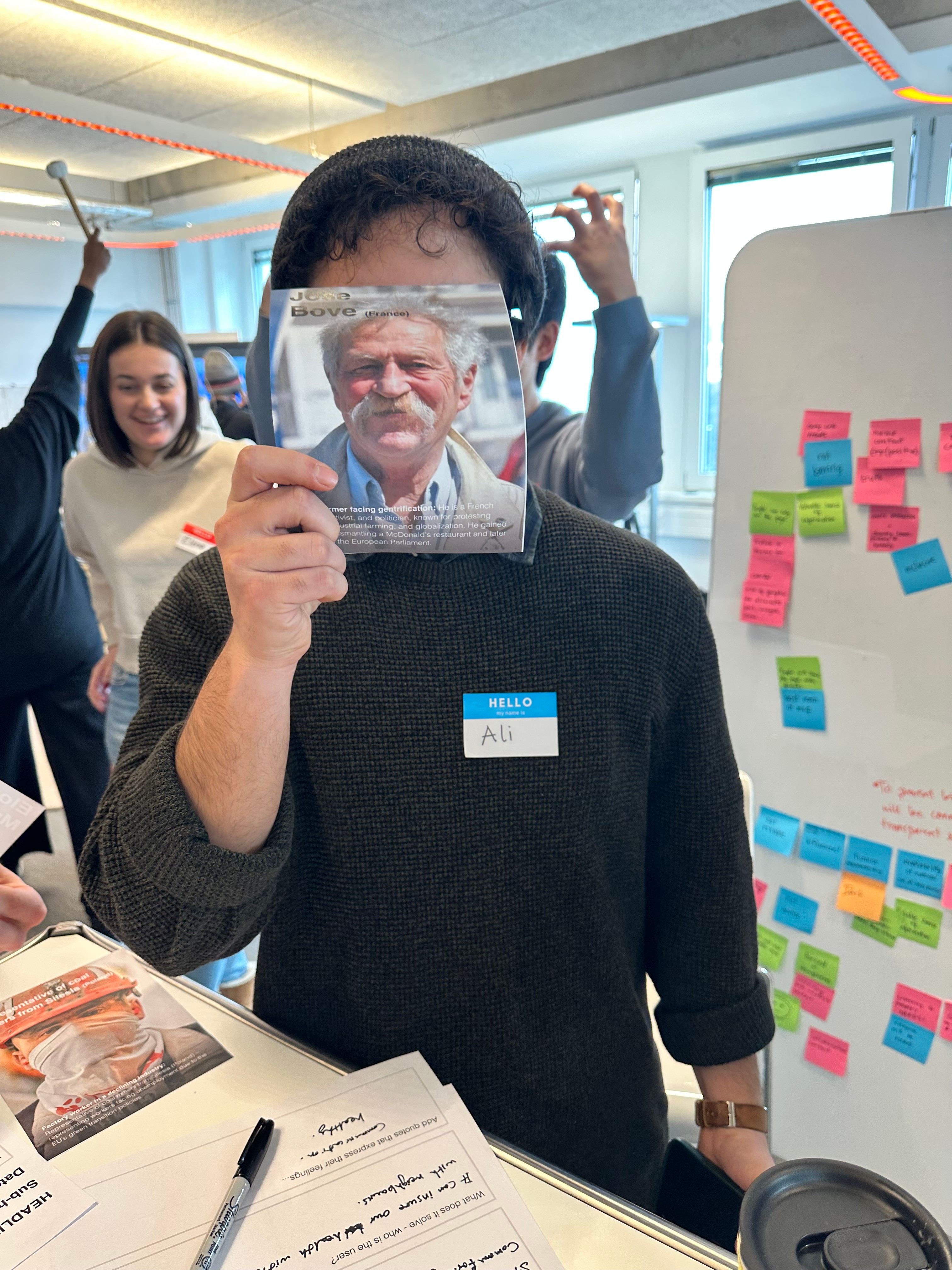
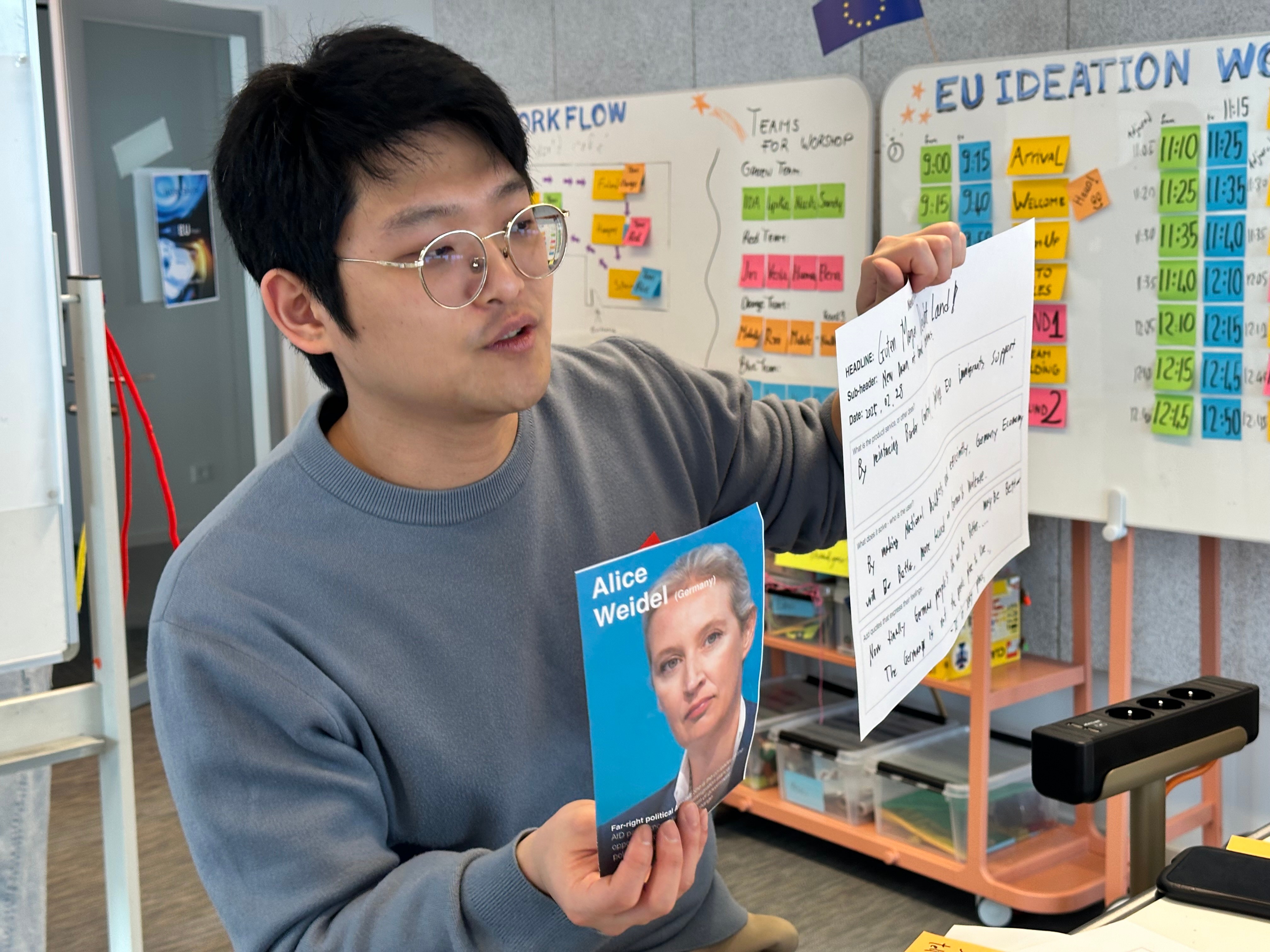
We combined a speculative design approach with creative and political realities to ground imagination in truth. Through an ideation workshop that mixed foresight, participation, and debate, we explored how future scenarios could inform public policy. This process became a bridge - turning abstract visions about democracy in Europe into tangible, human-centred concepts for the final speculative policy proposal.

DEMOCRACY REIMAGINED
IDEA
TION WORKSHOP
Banner Ideation Workshop srh - 2025
HOW WE IMAGINE IT
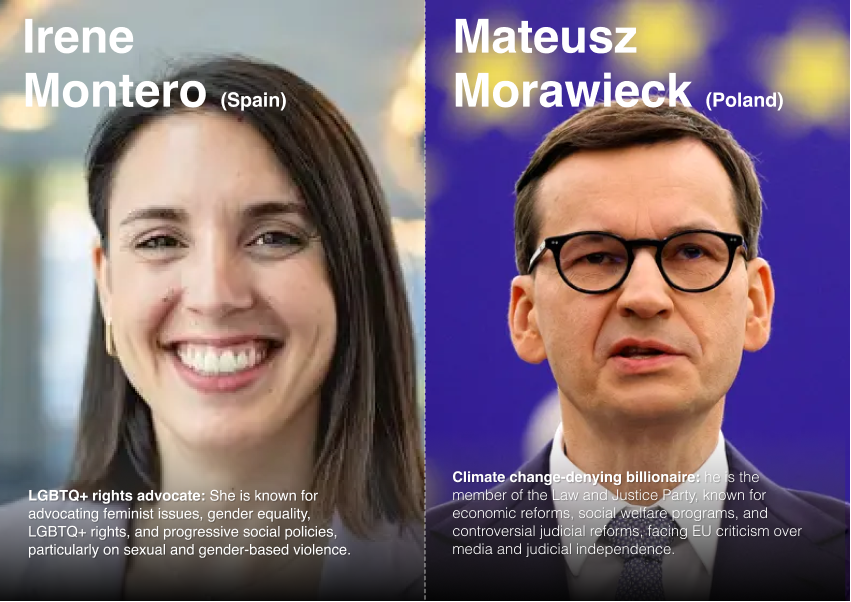
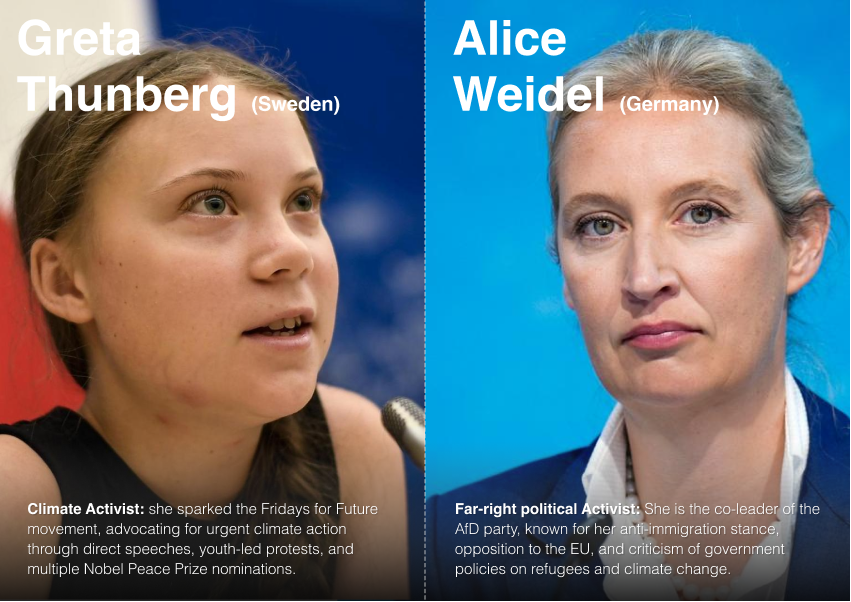
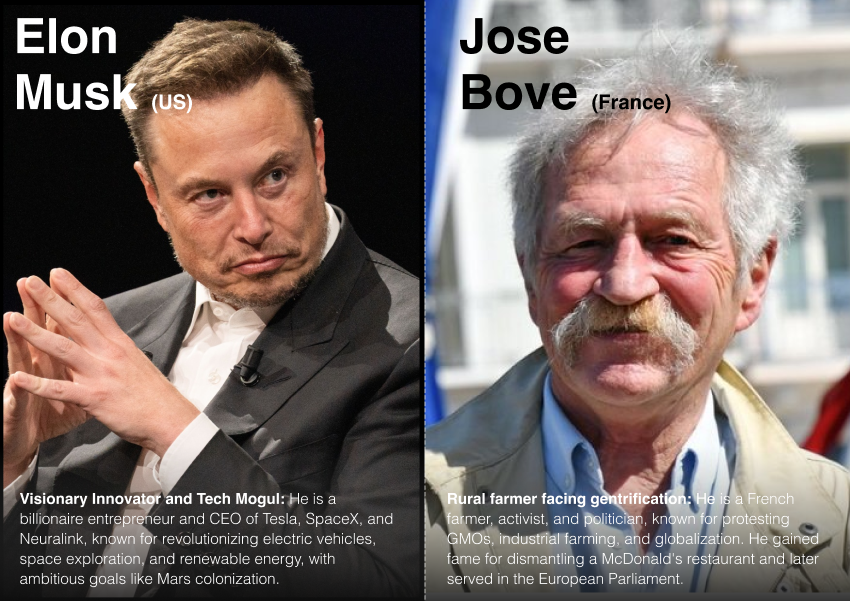
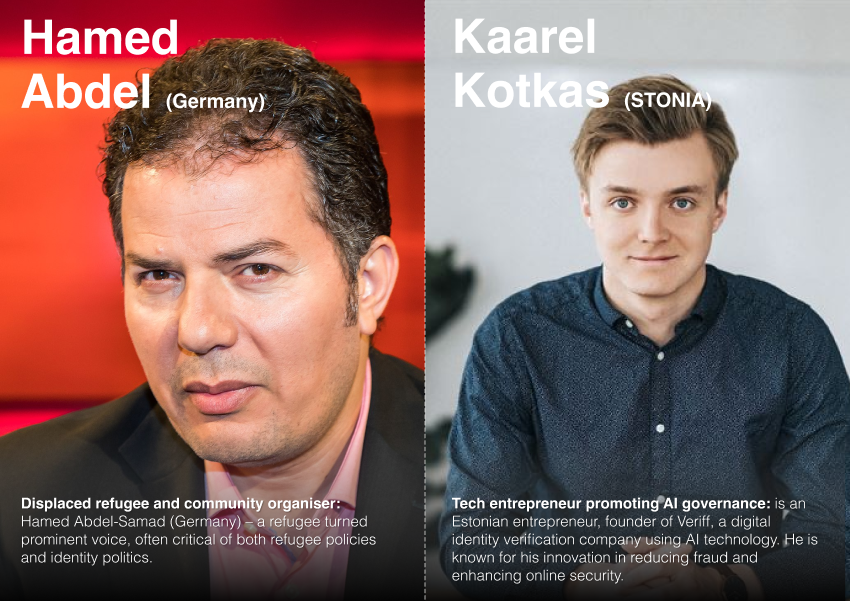
Real life characters use for the workshop
CONCEPT? SPECULATIVE OR JUST PROBABLE
MY COUNCIL FRIEND
Is a speculative public service platform designed to reconnect elders with their local communities through care, trust, and participation. It imagines a near future where democracy isn’t experienced only through voting or policy, but through everyday interactions - accessing healthcare, social activities, and essential services.
By blending emotional design and civic technology, the concept proposes a “life-support network” that turns local councils and new generations of youths into companions rather than bureaucratic systems and passive unaware citizens — making governance feel interpersonal, empathetic, and alive.
WATCH THE FINAL CONCEPT HERE
HERE
LESSONS
IMPLEMENTATION IS DYSTOPICAL?
Projects like My Council Friend require systemic change across EU social and digital infrastructures that still prioritise economic efficiency over emotional and generational care. It’s hard to build a platform of trust in systems that often see elders as data points or pension costs rather than living archives of experience.
MULTICULTURALITY FRAMEWORK GIVES HOPE
Coming from the Global South, I’ve learned that innovation doesn’t start only with technology; it starts also with people. Regenerative design reminds us that systems can heal when communities are given agency, time, and trust. The Global South has long practised this kind of social innovation, where care, collaboration, and adaptability become strategies for survival. If Europe wants to build a more democratic and compassionate future, it must look beyond digital infrastructure and recognise that regeneration begins with relationships, not platforms.
Like what you’re reading? Curious to know more about this or other projects?Let’s connect and explore future collaborations.
A virtual or in-person coffee could be the beginning.
EXPLORE +
→ TO PROJECTS
JUAN CAMILO
HERNANDEZ CANTOR
SERVICE - PRODUCT - DESIGNER


All rights reserved 2026 ©️
JUAN CAMILO HERNANDEZ CANTOR ©️
DEMOCRACY REIMAGINED
MAKING EU VALUES ACCESIBLE THROUGH INCLUSIVE MULTICULTURAL& INTERGENERATIONAL APPROACH
DEMOCRACY REIMAGINED
M.A PROJECT
Area
Public Policies Innovation
Team
x5 job creative backgrouns master studnets ( Malaika 🇺🇸 - lipika 🇮🇳 - hannah 🇩🇪 - huymra 🇧🇩)
Mentorship
Prof. Katrin Androshin - Prof. Julia Leihener (Program directors)
Drik Von Holleben ( information & communication officer European union)
Year
2024-2025
Location
between Brussels 🇧🇪 & Berlin 🇩🇪
Tags
Public Policies
Democratic Participation
Social Innovation
Co-participatory design
Specualtive Design Strategy
How can we break down the values of Europe and thus of
the European Union to an understandable level, with the
aim of making them accessible to different target groups,
so that these values are lived more in everyday life again
and democracy is strengthened in the long term?
GOALS
AGILE SPRINT
We got onboard late on this project as it came at the last minute. No harm done; however, we had a clear and obvious constraint: deliver on time without sacrificing quality.
MVP
- Have a strong and digital-based research focusing on young generations in Europe.
- Decentralising the power of information, focusing on border-oriented results (why?:
Political and social transformations often manifest first at the margins or borders of states - physical, cultural, or institutional - because these are zones of negotiation, contact, and friction. The centre typically reacts later, institutionalising what the periphery has already lived or contested.
“Change begins in the borderlands because they are closer to lived contradictions”
Peripheral Modernities / Latin American Decolonial Thought (Walter Mignolo, Aníbal Quijano)
- Use speculative design and forecasting to develop a very realistic, adaptable, and versatile solution for as much as possible with the diversity of cultures present in the EU currently.
PROBABLE IMPACT
- Built a digital research foundation connecting insights from young generations across Europe.
- Shifted information power from central institutions towards more border-oriented, inclusive perspectives.
- Developed speculative yet realistic design scenarios reflecting Europe’s cultural diversity.
- Delivered an adaptable framework that can evolve with future social and political contexts.
RESEARCH FROM THE BIASES TO THEORIES
The first phase was all about understanding perception - how the EU is seen from the outside. We started by mapping everything: biases, assumptions, data, and theories. It looked messy at first, but that was the point - to reveal contradictions and blind spots in how Europe tells its story. Using the triple diamond as a loose guide, this stage became a space for experimentation where research met emotion.
We built a visual system that connected facts and feelings, turning abstract information into something tangible and human — a foundation for the next phase of synthesis and concept creation.
COMPLEMENTARY RESEARCH
As our research was primarily qualitative, focusing on understanding narratives, perspectives, and experiences rather than numerical data. we aimed to obtain on insights gathered through interviews, observations, and desk research, all organised and analysed using
Miro boards. These boards serve as a visual space where you can explore our findings, methods, and key takeaways in more detail.
please find more about here
According to the Standard Eurobarometer 102 (Autumn 2024), 81% of respondents in the euro area support the common currency (the euro) — the highest level ever recorded.
Migration remains a central theme and a recurring point of distortion within right-wing and extremist political ideologies across several regions.
Speaking a language doesn’t simply mean translating a message into that language. English often serves as a neutral ground for discussing certain topics.
One assumption is that people who took the survey might feel more comfortable discussing their collective role within the EU rather than focusing on individual aspects of their identity.
Another assumption is that people don’t want the EU to interfere with their personal identity, as they don’t see it as the EU’s responsibility.
Despite its efforts to promote democracy, the EU struggles with a "democratic deficit," where decisions are often made by unelected bodies with limited direct citizen involvement.
Mobility facility is a greater common good value that most of the “citizens” are pride of.
SYNTHESIS
SUMMARY
In the synthesis phase, we aimed to make sense of the diverse insights gathered during research, connecting different perspectives to form a clear and structured understanding. Our approach combined systematic analysis with collaborative interpretation, ensuring that the complexity of European values was broken down into actionable insights.
System Map
HOW WE IMAGINE IT
System Map
AFFINITY DIAGRAM
OPPORTUNITY FIELDS
We explored opportunity fields in combination with iceberg models to identify not only surface-level connections but also deeper causal relationships.
This allowed us to uncover strong links and pinpoint key areas with the potential for development, aligning with the initial brief’s focus on addressing specific pain points.
HOW MIGHT WE #1
How might we
remind people of why the EU exists by becoming a memorable part of
everyday communication and interaction so they can feel represented and supportive?
HOW MIGHT WE #1
How might we
remind people of why the EU exists
by becoming a memorable part of
everyday communication and interaction?
HOW MIGHT WE #1
How might we
become a memorable part of everyday communication and interaction
so people of the EU can feel represented and supportive?
SPECULATIVE IDEATION
We combined a speculative design approach with creative and political realities to ground imagination in truth. Through an ideation workshop that mixed foresight, participation, and debate, we explored how future scenarios could inform public policy. This process became a bridge - turning abstract visions about democracy in Europe into tangible, human-centred concepts for the final speculative policy proposal.
DEMOCRACY REIMAGINED
9:00 AM
31 / 01 / 2025
IDEA
TION WORKSHOP
Banner Ideation Workshop srh - 2025
HOW WE IMAGINE IT
Real life characters use for the workshop
CONCEPT? SPECULATIVE OR JUST PROBABLE
MY COUNCIL FRIEND
Is a speculative public service platform designed to reconnect elders with their local communities through care, trust, and participation. It imagines a near future where democracy isn’t experienced only through voting or policy, but through everyday interactions - accessing healthcare, social activities, and essential services.
By blending emotional design and civic technology, the concept proposes a “life-support network” that turns local councils and new generations of youths into companions rather than bureaucratic systems and passive unaware citizens — making governance feel interpersonal, empathetic, and alive.
WATCH THE FINAL CONCEPT HERE
HERE
LESSONS
IMPLEMENTATION IS DYSTOPICAL?
Projects like My Council Friend require systemic change across EU social and digital infrastructures that still prioritise economic efficiency over emotional and generational care. It’s hard to build a platform of trust in systems that often see elders as data points or pension costs rather than living archives of experience.
MULTICULTURALITY FRAMEWORK GIVES HOPE
Coming from the Global South, I’ve learned that innovation doesn’t start only with technology; it starts also with people. Regenerative design reminds us that systems can heal when communities are given agency, time, and trust. The Global South has long practised this kind of social innovation, where care, collaboration, and adaptability become strategies for survival. If Europe wants to build a more democratic and compassionate future, it must look beyond digital infrastructure and recognise that regeneration begins with relationships, not platforms.
Like what you’re reading? Curious to know more about this or other projects?Let’s connect and explore future collaborations.
A virtual or in-person coffee could be the beginning.
EXPLORE +
→ TO PROJECTS
JUAN CAMILO HERNANDEZ CANTOR
SERVICE - PRODUCT - DESIGNER
All rights reserved 2026 ©️